 Maple Tree Kids
Raising proactive kids, not reactive ones.
Life is moving faster than ever. Kids are pulled in a hundred directions by screens, feeds and noise that tell them what to think and want. Many grow up reacting to whatever comes next.
We want something different. We want kids who know how to hold a hammer, cook an egg, say sorry and mean it, stay calm in an emergency and plan their week. Kids who are kind and tough, organized and curious. Kids who can think for themselves.
That doesn't come from an app alone. It comes from a grown-up sitting beside them. So Maple Tree Kids uses a little screen time to bring families back together: to the table, to real chores and to real conversations.
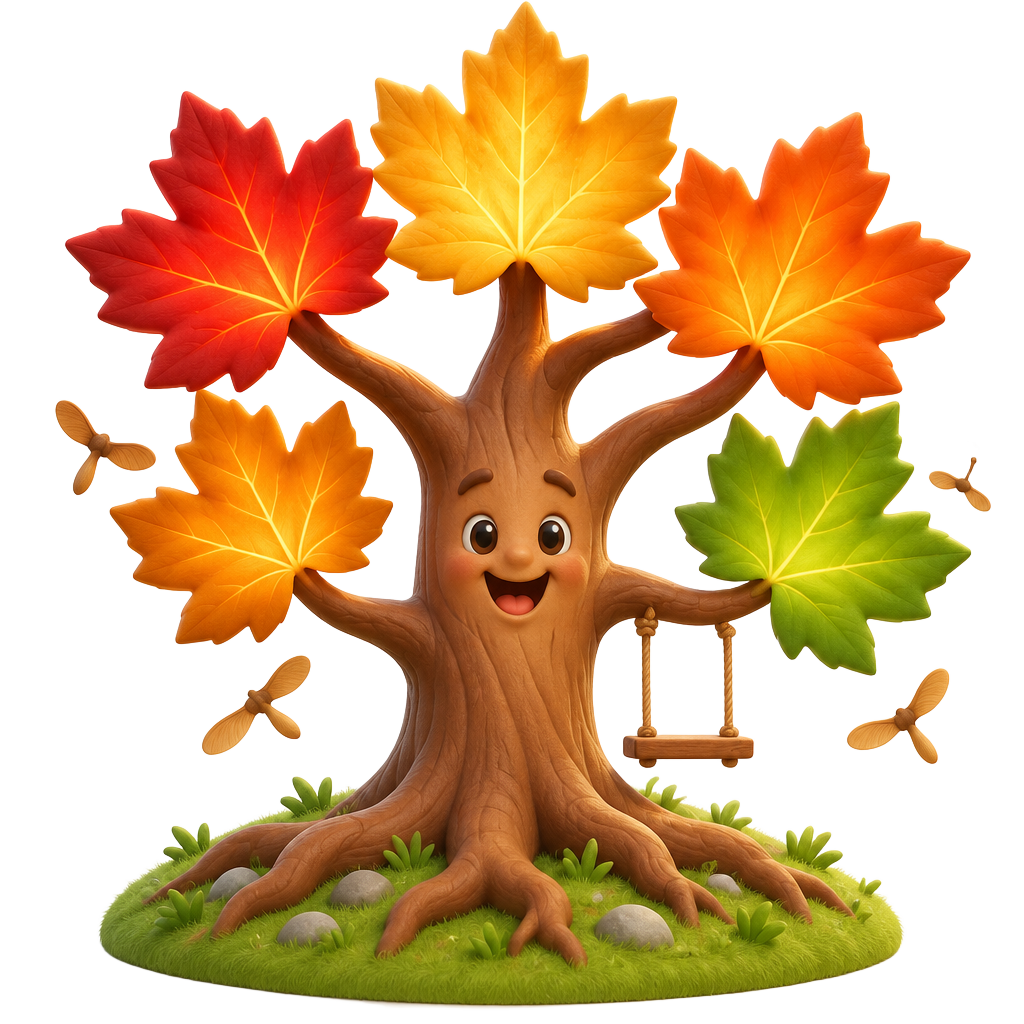
Why a maple tree?
A maple starts as a tiny seed with a helicopter wing. It puts down deep roots before it grows tall. It bends in storms without breaking, and every fall it shows its true colors. That's how we want kids to grow: rooted at home, steady under pressure, and ready for whatever life brings.
Roots
Family comes first
Kids grow strong when a grown-up sits beside them. We ask parents to play the first games with their kids, eat one meal together a day, and talk about what they learned.
Research: Harvard Graduate School of Education · The Family Dinner Project. Family mealtimes are hugely beneficial for kids, yet only about 30% of families eat together regularly. Any meal counts, and the talk matters most.
Trunk
Steady habits
Chores, routines and a simple weekly plan. Kids learn to plan ahead and keep promises, so they act before problems happen instead of only reacting to them.
Research: University of Virginia. Kids who help with chores say they feel more capable, competent and happy.
Branches
Real skills
Tools, cooking, money, safety, school basics and smart tech use. Most games end with an off-screen mission so learning turns into doing.
Research: University of Cambridge. Many adult money habits are already set by about age 7.
Leaves
The five MAPLE values
Manners, Ability, Planning, Love, Effort. Every game grows one of them.
Research: Penn State & Duke University. Kindergartners with stronger social skills (sharing, helping, cooperating) were more likely to graduate college and hold steady jobs about 20 years later.
Seasons
Growing up, step by step
From Little Explorers (ages 1–3) through 6th grade, every season brings new challenges matched to each kid.
Research: Harvard Center on the Developing Child. Planning, focus, self-control and switching gears aren't skills kids are born with. They are built with practice, and kids use them for life.
Seeds
Passing it on
Kids who grow up kind and capable help the next ones grow too: siblings, friends and one day their own families.
Plant the seed together
Sit with your kid for the first few games. Ten minutes a day, one meal together, one real-life mission. That's how a maple grows.
All our content is neutral for every family: no politics, no religion, no gender roles.